
What Should I Tell My Professional Organizer About My Lifestyle?
If you've booked (or are considering booking) your first session with a professional organizer, you may be wondering what information is actually helpful to share beforehand.
Do you tell them about your home? Your clutter? Your goals?
The answer is yes- but what I find even more valuable is learning about you.
Your home didn't become the way it is overnight. It's a reflection of the life you've been living, the responsibilities you've been carrying, the challenges you've faced, and the things that matter most to you. The more a professional organizer can understand your lifestyle, the better we can create organizing systems that genuinely support your life long after we leave the home- not just make your home look tidy for one day.
Your lifestyle tells a much bigger story than your clutter
When I first meet a client, I'm not trying to determine how "organized" they are.
I'm trying to understand what life has looked like for them, in its most raw reality.
Has something significant happened recently that's made it difficult to keep up with the house? Have you experienced a loss? Are you caring for aging parents? Are your evenings consumed by driving your children to activities? Are you working long hours and simply running out of energy?
These aren't excuses.
They're helpful context.
Understanding your reality allows me to recommend solutions that fit your life instead of expecting your life to fit a perfect organizing system.
Paint me a picture of your week
One of the most helpful things you can do is describe what a typical week actually looks like.
I'd love to know things like:
What does your average day look like?
What responsibilities take up most of your time?
What hobbies or interests are important to you?
When do you feel most energized?
When do you feel completely drained?
Who else lives in the home, and how do they use the space?
Sometimes clients discover, just by talking through these questions, that they've never really stepped back to observe their own habits objectively.
That's where some of our biggest breakthroughs begin.
Tell me about your hardest days (if you’re comfortable)
One question I especially love asking is:
What does your worst day in a typical week look like?
Not because I want you to relive difficult moments, but because organizing systems need to work on those days- not just on your best ones.
If your worst day leaves you mentally exhausted, your organizing system should require very little decision-making.
If you're rushing between work and family commitments, your home should make those transitions easier, not harder.
Then I like to ask the opposite:
What does your best day look like?
And finally:
What would your dream day at home feel like?
Those three questions tell me far more than simply asking, "What room do you want to organize?"
Tell me what's already working
It’s very likely that not everything in your home is broken, even if feels like it might be in the moment.
I always like hearing about the habits that are working.
Maybe you always hang your keys in the same place.
Maybe laundry gets folded right away.
Maybe you have one shelf that you love maintaining, because it holds your favourite items.
Or maybe nothing immediately comes to mind- and that's okay too!
Understanding both your successes and your struggles helps us build systems that feel natural rather than forced.
Tell me where you get stuck
Sometimes clients tell me:
"I always start organizing... and then I stop."
That's incredibly valuable information.
I want to understand:
Where do the piles usually begin?
What happens right before you stop?
What emotion shows up?
Is it overwhelm?
Decision fatigue?
Fear of making the wrong choice?
Often, those blockers have much less to do with organization than people think.
Together, we can unpack those patterns and build strategies that work around them instead of fighting against them.
Your lifestyle changes the organizing solutions I recommend
No two organizing sessions are exactly alike because no two lives are alike.
A creative person needs different systems than everyone else
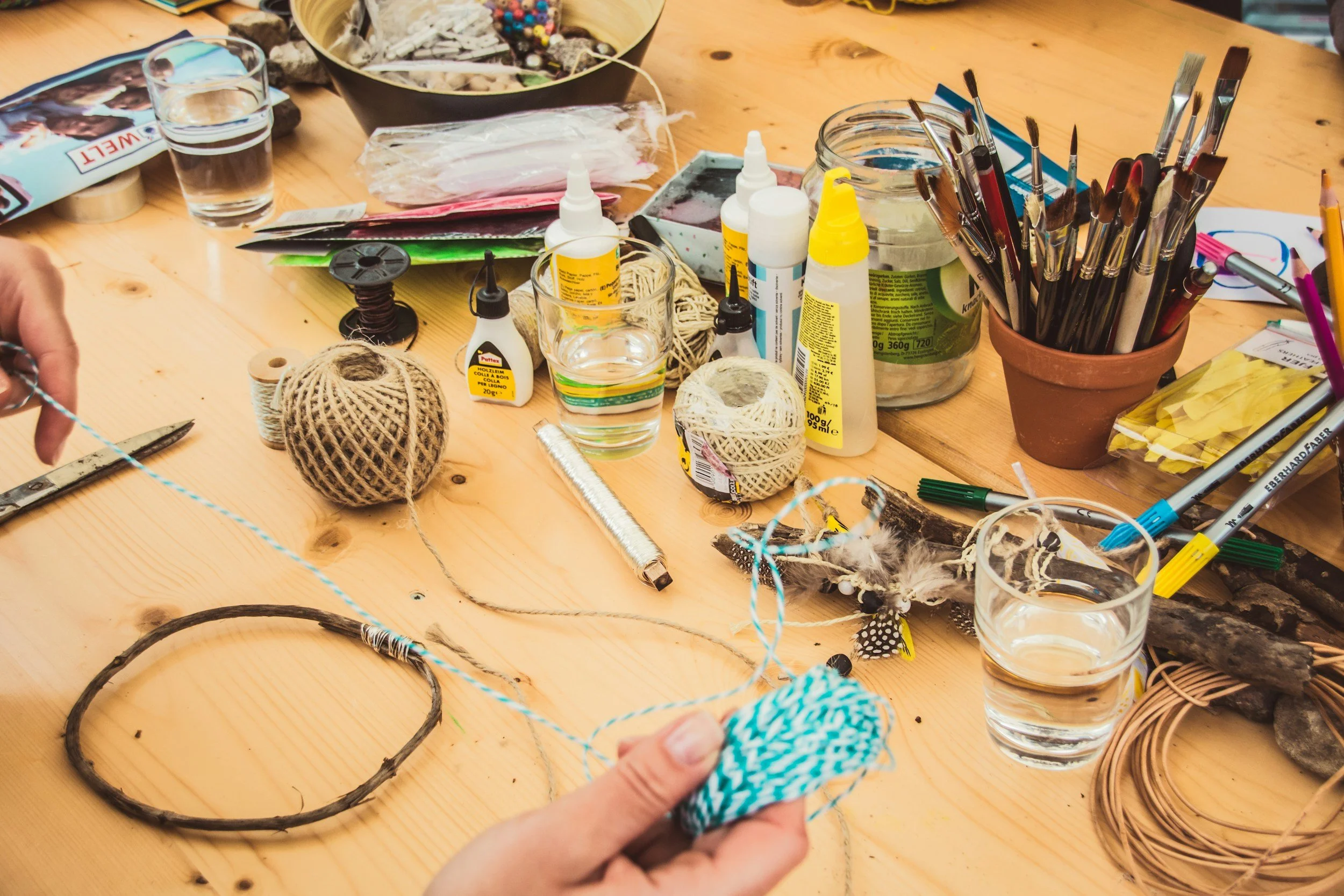
One of my clients absolutely LOVES crafting.
Like many creative people, they could see endless possibilities in everyday items. Small scraps of paper, tissue, ribbon, and packaging all held potential for future projects.
I love that creativity! Creative brains are so beautiful and fascinating. 🩷
Instead of focusing on what they "didn't need," we shifted the conversation toward what inspired them most.
We looked at projects they'd already created, the crafts they still dreamed of making, and the supplies they reached for most often.
The organizing solutions reflected that lifestyle:
Clear storage bins to increase visibility.
Labels to reduce searching.
Vertical storage so more supplies could stay visible instead of buried.
The goal wasn't to eliminate creativity.
It was to make creativity easier to enjoy.
Someone experiencing grief needs something entirely different
Grief changes the way our brains function.
When someone is processing significant loss, their mental energy is already being used to navigate incredibly complex emotions. Decision-making and focus often become much more exhausting than usual.
That changes the way I organize with them.
Rather than scheduling long sessions, I encourage shorter ones with more frequent breaks.
Rather than creating elaborate organizing systems, we prioritize simple, supportive solutions that require very little mental effort to maintain.
Sometimes those solutions look unconventional.
That's okay.
The best organizing system is never the prettiest one.
It's the one someone can actually continue using.
The things you're embarrassed to tell me are often the most helpful
Many people worry about telling me things like:
"I've been impulse shopping."
"The dishes have piled up."
"The litter box hasn't been cleaned."
"I've been avoiding an entire room."
"I'm struggling with my health."
What I want people to know whole-heartedly is this:
None of those things make me judge you.
Because after working in so many homes, I've learned that these situations rarely exist on their own.
They're connected to something deeper which are now costing you your peace of mind.
Stress. Burnout. Loss. Health challenges. Overwhelm.
They're not character flaws.
They're signs that someone has been carrying an extremely heavy load.
Supporting people through those seasons of life is without question, the most meaningful part of my work.
You don't have to tell me everything
You never have to share anything you're uncomfortable sharing.
This isn't therapy.
But the more you're comfortable telling me about your life, the better I'll be able to recommend organizing systems that still make sense months after I've left.
My goal isn't simply to organize your home.
It's to understand how your home can better support you.
Professional organizing isn't about perfection
I think social media has unintentionally created unrealistic expectations for what organized homes should look like.
Beautiful pantries.
Perfect labels.
Magazine-worthy closets.
While those spaces can certainly be inspiring, they aren't what success looks like for most people.
Even after working with a professional organizer, your home will still look lived in.
Mine does too. Life happens!
The real measure of success isn't perfection.
It's progress.
It's feeling less anxious when someone unexpectedly knocks on your door.
It's being able to find what you need more easily.
It's maintaining your home in a way that works alongside the natural ebbs and flows of your capacity.
Most importantly, it's learning to understand your own habits instead of constantly fighting them.
Your organizing systems should support the life you actually live—not the life you think you're supposed to live.
Final thoughts
If you're preparing for your first session with a professional organizer, don't worry about saying the "right" thing.
Instead, tell us about your life.
Tell us about your routines.
Tell us about your challenges.
Tell us about your goals.
Tell us what home feels like on your hardest days- and what you hope it could feel like on your best ones.
Because the best organizing solutions aren't designed around perfect homes.
They're designed around real people, with real challenges which make us the resilient bad-asses we are. 💪
